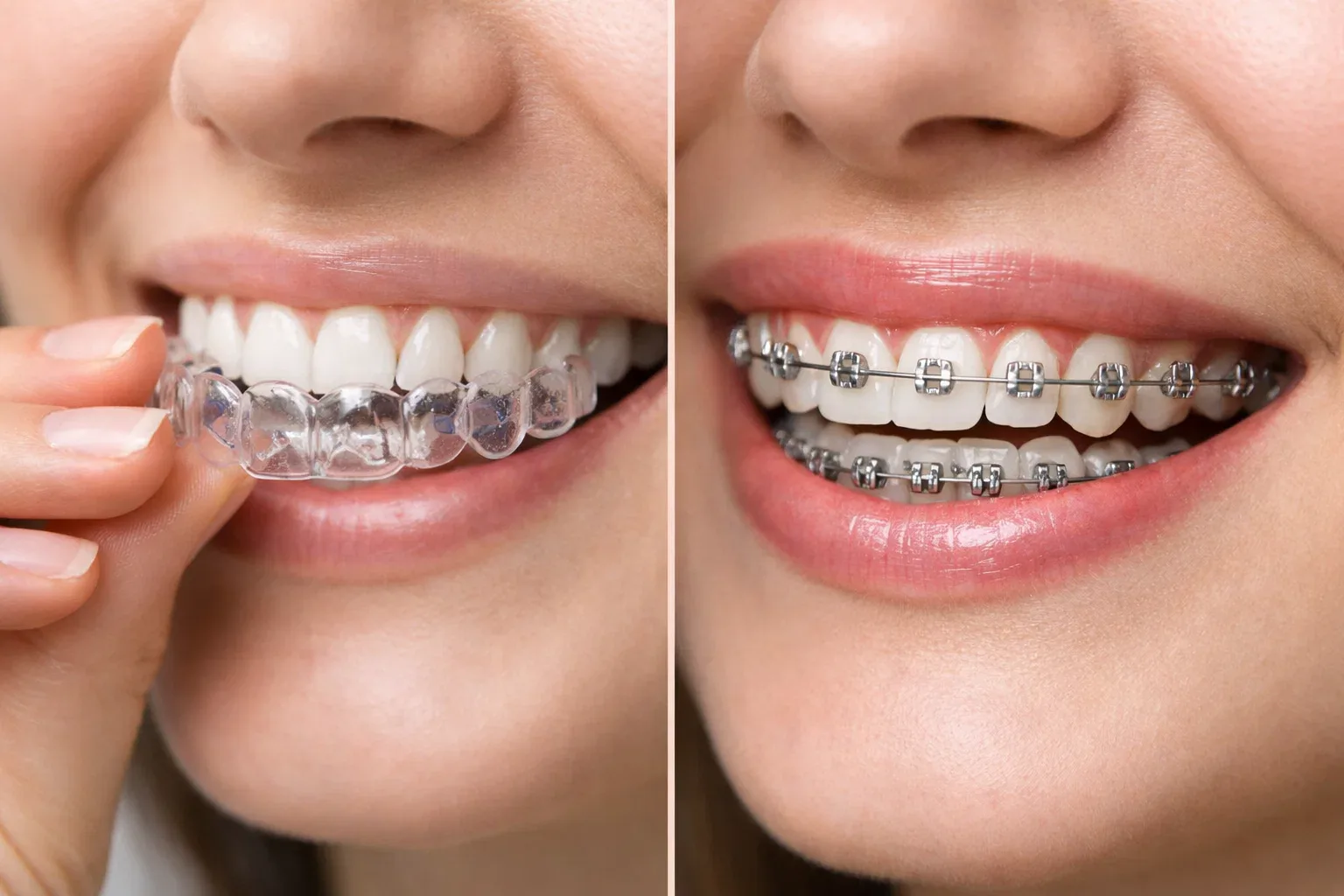
One of the questions most frequently asked by patients who decide on orthodontic treatment is the difference between clear aligners and conventional braces (brackets). Both methods have the same goal: moving the teeth into their correct positions with similar movements to achieve a healthy and aesthetic result. However, there are some important differences in how the treatment progresses and how comfortable the patient feels.
This article is based on the views of our orthodontist, Dr. Ela Uzun, on clear aligner treatment.
Same Goal, Different Route
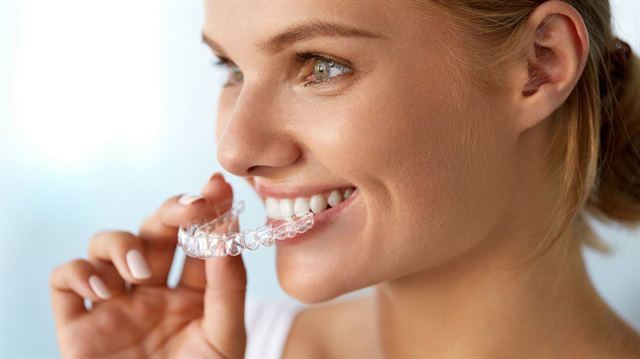
With braces, force is applied to the teeth through brackets bonded to the tooth surfaces and the wires attached to them. In clear aligner treatment, custom-made aligners that cover all the teeth are used and replaced with new ones at set intervals.
With both methods, treatment begins with a detailed examination and planning. Which method is more suitable is decided by evaluating the type of orthodontic problem, the patient's expectations and their compliance with treatment.
Is There a Difference in Pain and Sensitivity?
With braces, the forces applied can feel more intense, especially when there is a lot of crowding. For this reason, patients may sometimes experience more noticeable pressure and sensitivity after wire adjustments.
With clear aligner treatment, tooth movements are carried out in smaller, more controlled steps with each aligner. It is normal to feel slight pressure for the first few days after switching to a new aligner; however, patients generally go through the process with milder pain and discomfort.
Daily Life and Aesthetics
- Appearance: Clear aligners are hard to notice, even up close. Brackets, on the other hand, are visible in the mouth.
- Eating: Since aligners are removed during meals, there are fewer food restrictions. With braces, hard and sticky foods should be avoided.
- Special occasions: Aligners can be removed for a short time for an important meeting or a special day.
- Wearing discipline: Braces are fixed, so they work continuously. Clear aligners need to be worn 20–22 hours a day, which requires the patient's cooperation.
Emergencies
With braces, situations such as a bracket coming off, a wire becoming loose or poking the cheek may require an extra appointment. Such emergencies do not occur with clear aligner treatment. If an aligner is lost or damaged, simply letting your orthodontist know is enough; you will be advised to move to the previous or next aligner according to your treatment plan.
Oral Care
Brackets increase the number of surfaces that need brushing and make it harder to clean between the teeth. With clear aligner treatment, because the aligners can be removed, you can brush your teeth as usual; however, the aligners also need to be cleaned regularly. With both methods, using dental floss or an interdental brush is important.
Which Method Is Right for You?
Clear aligners and braces are not rivals but two orthodontic options that meet different needs. In some cases both methods can achieve similar results, while in others one may be more suitable than the other. The right decision is made after a clinical examination, the necessary imaging and digital planning.
Orthodontic Treatment in Çanakkale
At Dent Assos, both clear aligner and braces treatments are planned individually. To decide together on the method that suits you best, you can contact our clinic and book an examination appointment.